
Storm & Construction Debris Cleanup in Northern VA: What We Haul, What We Recycle, and What Needs Special Disposal
Need storm or construction debris cleanup in Northern VA? Learn what we haul, what we recycle, and what requires special disposal—fast pickup available.
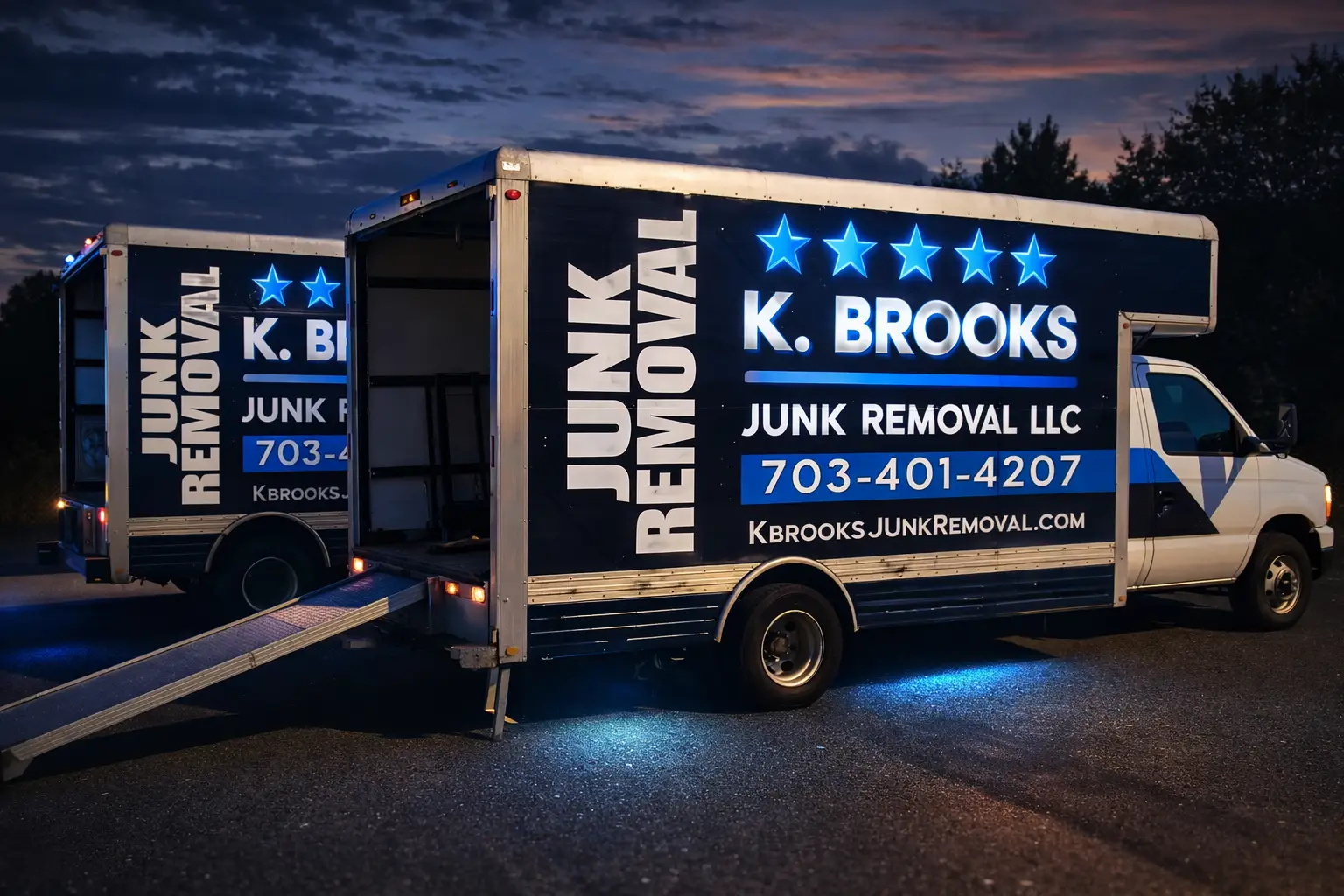
After a storm or renovation, debris piles up fast — and not everything can be tossed the same way. Some materials are easy haul-away and recycling. Others require special disposal or different routing entirely. This guide breaks down what we haul, what we recycle, and what needs special handling across Northern Virginia — plus how to get a fast same-day quote.
KBrooks Junk Removal
Storm debris • Construction cleanup • Recycling-first
Fast quote tip:
A wide photo of the pile + a close-up of the materials = accurate routing (recycle vs special disposal).
Pro tip: mixed piles (wood + drywall + shingles, etc.) quote fastest when items are grouped by type.
In this guide
- 1) Quick answer: what we haul & how it’s handled
- 2) Storm vs construction debris: what’s different
- 3) What we haul (common items)
- 4) What we recycle (recycling-first routing)
- 5) What needs special disposal
- 6) Prep checklist: fastest pickup
- 7) FAQs
Quick answer: what we haul, what we recycle, what needs special handling
Most storm and construction debris can be hauled away and routed responsibly — but the best route depends on the material: clean wood and metal often go to recycling, mixed construction debris usually goes to a transfer/disposal facility, and certain items (like paint, chemicals, batteries, or refrigerant units) can require special disposal. If you’re unsure what you have, photos are the fastest way to confirm routing and pricing.
Best for: storm piles
Branches, fencing, wet wood, scattered yard debris, damaged outdoor items.
Best for: renovation cleanup
Drywall, lumber, flooring, cabinets, fixtures, tile, carpet padding.
Best for: mixed debris
Multiple material types in one pile (we sort where it makes sense).
Storm vs construction debris: what’s different
Storm debris is often wet, heavy, and scattered (branches, fencing, soggy materials). Construction debris is often dense and dusty (drywall, tile, lumber, bags of rubble). Both affect labor time, truck space, and disposal routing — especially when materials are mixed.
Storm debris “gotchas”
- Wet piles weigh more than they look
- Scattered debris takes longer to load
- Mud/ice can affect access and safety
Construction debris “gotchas”
- Tile/concrete/dirt are extremely heavy
- Bagged debris loads fast but can max out weight
- Mixed materials affect routing and time
What we haul (common storm & construction items)
Here are the most common debris types we pick up across Northern VA:
Storm / outdoor debris
Branches, brush, logs (small/medium), fencing, damaged patio items, blown insulation (bagged), tarps, and general yard debris.
Renovation / construction debris
Drywall, lumber, trim, flooring, carpet/padding, cabinets, doors, sinks/vanities, fixtures, and bagged rubble.
Heavy debris (mention upfront)
Tile, concrete chunks, bricks, dirt, shingles, pavers, and multiple bags of dense demo material.
Mixed piles
Combination piles are fine — grouping like materials helps pricing and routing.
What we recycle (recycling-first routing)
When debris is clean and separable, recycling is often the best route. The biggest wins are usually: metal, clean wood, and cardboard/packaging from remodels.
Great recycling candidates
- Scrap metal (appliances, fixtures, fencing, rebar)
- Clean lumber and untreated wood
- Cardboard boxes and clean packaging
Sometimes recyclable (depends on condition)
- Wood with nails/fasteners (often OK if separated)
- Storm-damaged items (varies by material)
- Electronics (handled as e-waste)
Recycle faster tip:
If you can keep metal in one area and clean wood in another, sorting is quick — and your quote is typically tighter.
What needs special disposal (don’t mix these in)
Some materials can’t be handled like normal debris. If you have any of these, mention it upfront so we can route it correctly:
Common “special” items
- Paint, stain, solvents, chemicals
- Batteries (lithium, car batteries)
- Propane tanks (full/unknown)
- Refrigerant appliances (fridges/freezers/AC)
Material-specific notes
- Concrete/tile/dirt: heavy loads (pricing changes)
- Sharps/needles: separate + label (if present)
- Electronics: keep together for e-waste routing
Fast safety note:
If you’re not sure what an item is (chemicals/containers), snap a photo and keep it separate. We’ll tell you the safest route.
Prep checklist: fastest pickup + cleanest routing
A little prep makes pickup faster and keeps your quote accurate.
Before pickup
- Group similar materials (metal, wood, drywall)
- Bag small rubble/debris (loads faster)
- Separate special items (paint, batteries, propane)
- Send photos: wide shot + close-ups + access
If it’s scattered
- Mark the pickup zones (front yard/back yard)
- Clear a safe path (ice, mud, obstacles)
- Flag heavy items so we plan crew/equipment
- Send a quick video walkthrough if easier
Storm & Construction Debris Cleanup FAQs
Yes — storm piles are common in Northern VA. Send photos of the pile(s) and access so we can quote fast and schedule quickly.
Absolutely. Drywall, lumber, flooring, and demo debris are common. Mention any heavy material (tile/concrete) for accurate pricing.
Keep it separate and snap a photo. We’ll tell you the safest route (and whether it affects pricing or disposal).
Serving Northern Virginia • Woodbridge • Prince William County
Need cleanup fast?
Send a few photos and we’ll confirm what’s recyclable vs special disposal — and give you a straightforward same-day quote.